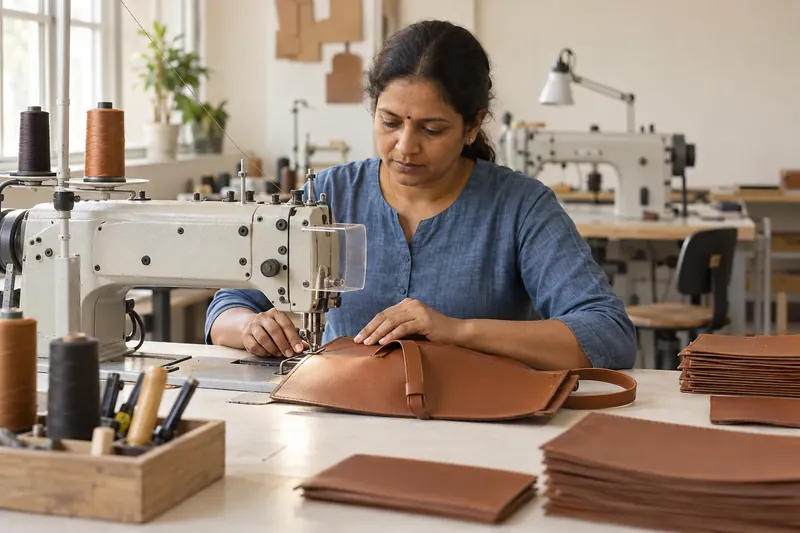
Choosing a manufacturer means choosing the people who will work through your design with you. The sample matters, but so do the questions they ask, the way they handle changes and the clarity of the quotation. Give every supplier the same brief, then look closely at the answers.
Start with the bag you want to make
Write a short summary of the shape, intended use, dimensions, quantity and launch window. Include the features that will affect construction, such as a structured body or an adjustable strap. Ask to discuss relevant work. A supplier’s experience should connect to the product you are developing.
Ask who develops the sample
Find out who will work on the pattern and sample, who receives your comments and how revisions are agreed. Notice whether the supplier asks about missing dimensions, leather feel or the opening. Those questions show you how the development discussion will work.
Compare the same specification
Give each manufacturer one version of the brief. Compare leather, lining, hardware, branding, packaging, quantities and delivery terms. List sampling charges separately. If one quotation uses a different component, ask for the difference to be made explicit before comparing the unit price.
Work through the supplier checklist
Request the facility information, audit documents and material reports your buying team needs. Check what each document covers. At Farhan Exports, this conversation can include the SMETA audit, worker-welfare provisions, finished-leather testing and EU REACH declaration.
Pay attention during sampling
Use the development stage to see how changes are handled. Can both teams identify the latest version? Are your comments acknowledged and carried into the next sample? Bring feedback into one list and expect the revised specification to reflect the agreed decisions.
Choose for the repeat order, too
Review product fit, development, price, communication and documentation together. Before committing, confirm the approval process, schedule and main contact. Keep the approved sample and specification available for future orders, and ask how material changes will be handled.
Give shortlisted manufacturers the same job.
Ask each supplier to quote the same dated brief and list exclusions. Compare the material, quantity breakdown, sample terms, payment trigger and delivery basis. A low unit price is hard to interpret if packaging or inspection sits outside it. Review the sample and the written quotation together.
Compare sourcing options and order budgets