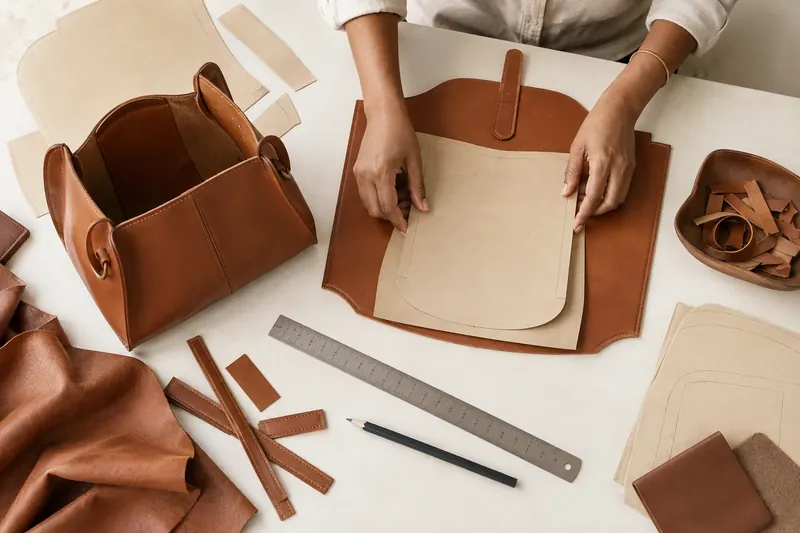
A reference image shows the mood. A brief explains how the bag should work. Before we develop a sample, we need to know what sits behind the picture: the size, the feel, the opening and the details your customer will use. You can start with sketches and notes; the open questions can be worked through together.
Tell us who will carry it
Describe the intended use. A work tote might need room for a laptop and a comfortable handle drop; a small evening bag has different priorities. Tell us what the bag must hold and how it will be carried. If you share references, mark the specific shape, seam or feature you want to discuss.
Put measurements on the drawing
Include height, width and depth, handle drop, strap length and the size of the opening. State whether measurements are internal or external. Mark the dimensions that cannot change, particularly where the bag must fit a named item. A sketch with measurements is more useful than a photograph alone.
Show the inside as well as the outside
Draw the compartments, pockets and lining layout. Note the closure, strap attachment and any reinforcement your design needs. Show where you want visible stitching and how the edges should look. These choices affect both the sample and the quotation.
Send material references
Share leather and lining swatches where possible, with colour references and notes on feel. Explain whether the shape should stand upright or fall softly. List the buckle, zip or clasp dimensions and finish. If a material is still undecided, mark it as open so we can discuss options.
Add the order plan
List the quantity for each style and colour, the destination market and your target delivery window. Our handbag minimum is 100 bags per colour, per style. Include logo artwork and packaging requirements early; they should be part of the development plan.
Explain how you will approve the sample
Name the person collecting feedback and tell us which tests or inspections your brand requires. Agree what the first sample needs to demonstrate and how revisions will be recorded. This helps both teams distinguish a shape review from final production approval.
A brief the sampling team can act on.
Give every reference a note: what should stay, what should change and which measurement controls the decision. Mark the file version and name one person to consolidate comments. Include the destination and quantities early, so development and quotation use the same brief.
Explore private-label development