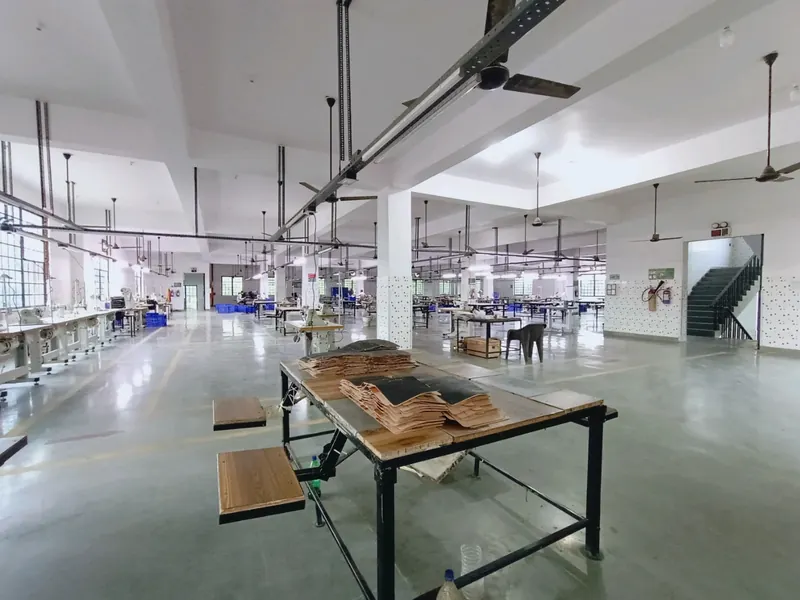
A leather handbag moves through design, material selection, sampling, cutting, assembly and finishing before it is ready to pack. The decisions made at one stage affect the next: a change to a handle fitting can change the attachment; a different leather can change the way the body holds its shape. This guide explains what a buying team should agree at each stage, using Farhan Exports’ private-label handbag service in Unnao, India as the commercial reference.
Define the handbag and its intended use
Start with the person who will carry the bag and what must fit inside it. A work tote, a compact crossbody and an evening clutch need different proportions, access and support. Put the intended contents beside the dimensions: a stated width alone does not tell the sampling team whether a laptop sleeve or a particular wallet must fit.
Provide front, side and interior views, handle drop or strap range, pocket positions, closure details and branding artwork. Mark which features are fixed and which you want help developing. Give the brief a version number and use that reference in the quotation and sample feedback.
Buyer handover: one product brief, the quantity by style and colour, the destination and the required receiving date. See our handbag sampling brief for the information to send.
Select leather, lining and fittings together
Leather colour and surface finish are only part of the specification. Thickness, flexibility and the intended body structure affect how a panel bends, a corner turns and a handle feels. Review the leather with the lining, reinforcement and hardware rather than approving each from a separate photograph.
Set the finish and dimensions of zips, rings, buckles and clasps. A fitting that looks similar may need a different attachment or strap width. Confirm substitutions before sampling so the reference product represents the components you intend to order.
Buyer handover: material and component references, colour approvals, required supplier documents and any agreed tests. Farhan Exports’ materials library includes leather, cotton lining and fitting-finish references; confirm the physical selections before approval.
Develop the pattern and review the sample
The pattern translates the agreed shape into panels and construction details. Sampling brings those parts together so both teams can review the proportions, access, carry and finish. Check the sample with its intended contents, including the opening, usable pockets, strap adjustment and the way the bag sits when filled.
Record comments against one dated sample version. Photograph each point, distinguish a design preference from a measurement that differs from the brief, and identify the required change. When a revision changes the construction or materials, agree whether another sample is needed before production approval.
Farhan Exports has in-house design and sampling. Samples are free in 7–15 days; the buyer pays courier charges. That sample timing is separate from the time needed for your review and any revisions.
Buyer handover: the approved sample reference and a written record of final measurements, components and outstanding points. Use the sample review checklist.
Confirm the order and prepare for cutting
Before cutting begins, connect the approved sample to the order quantities, leather and component references. Leather has natural variation, so agree the appearance standard and the areas of the bag where particular surface characteristics are acceptable. Include panel orientation and matching requirements where they matter to the design.
Quantities need to be explicit. Farhan Exports’ handbag minimum is 100 bags per colour, per style: two styles in two colours start at 400 bags. Record each combination separately and resolve any material or hardware purchasing requirements in the quotation.
Buyer handover: the approved specification, final order matrix, quotation and production schedule. The sample-to-production approval guide explains how to keep these records together.
Assemble the body, lining and carry details
During assembly, the separate panels and components become the handbag described by the approved reference. Seams, lining, pockets, closures, handles and straps need to work as one construction. Changes to one element can affect the rest, particularly at corners, openings and attachment points.
Agree how production questions and proposed changes will be raised. If a replacement fitting, lining or leather is proposed, review its effect on the whole bag before accepting it. Keep the approved sample and the current specification aligned so they do not give the production team conflicting instructions.
Buyer handover: a named approval contact and written decisions for any agreed change. Review Farhan Exports’ manufacturing facility and discuss the production checkpoints for your order.
Finish and inspect against agreed criteria
Review the edge finish, seams, closures, hardware, labels and overall appearance against the approved sample. Measure the agreed dimensions, check pocket access and operate the closures and strap adjustments. Record findings by style and colour so a correction is connected to the right product.
Visual inspection and functional checks serve different purposes from laboratory testing. Agree any load, durability, colour-transfer or chemical tests separately, including the applicable method and acceptance criteria. Do this before production so the sampling, material selection and inspection plan can account for it.
Buyer handover: inspection criteria, any agreed test requirements and the procedure for resolving findings. The quality and testing page and supplier documentation page explain the available information and its scope.
Pack, document and plan the shipment
Confirm individual protection, labels, barcodes, carton quantities and carton marks. If the order contains several styles or colours, make the packing instructions match the order matrix and the receiving warehouse’s requirements. Review the document set with your forwarder and the team before dispatch.
Farhan Exports’ production period is 75–90 working days from order confirmation or receipt of the 30% advance payment, whichever is later. The remaining 70% is due when goods are ready for dispatch. Freight and destination clearance need additional time; the Incoterm, named place and port are agreed in the quotation.
Buyer handover: final packing instructions, receiving details, agreed shipment documents and the dispatch arrangement. Download the production handover checklist and use the sourcing terms to plan your collection.